
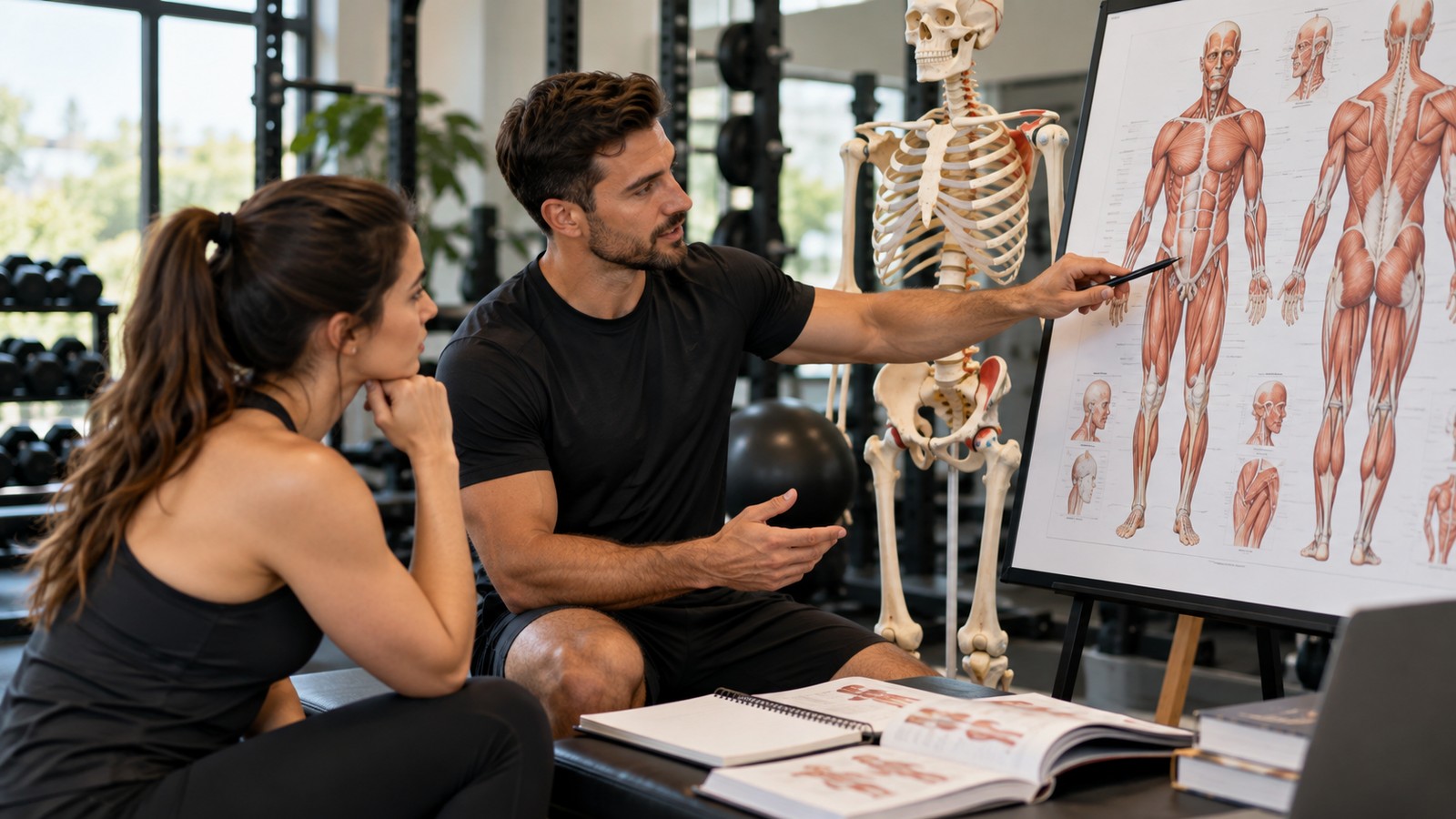
How understanding the body supports clearer exercise instruction, safer decisions and better programming
Personal trainers do not need to be doctors, but they do need a working understanding of how the body responds to exercise. Anatomy and physiology provide the language and principles that help a trainer understand movement, muscle function, exercise responses and the reasons behind many programming decisions.
For a new fitness professional, this knowledge turns exercise instruction from memorising movements into understanding why a movement is being used and what the trainer is trying to achieve.
Anatomy helps you understand movement
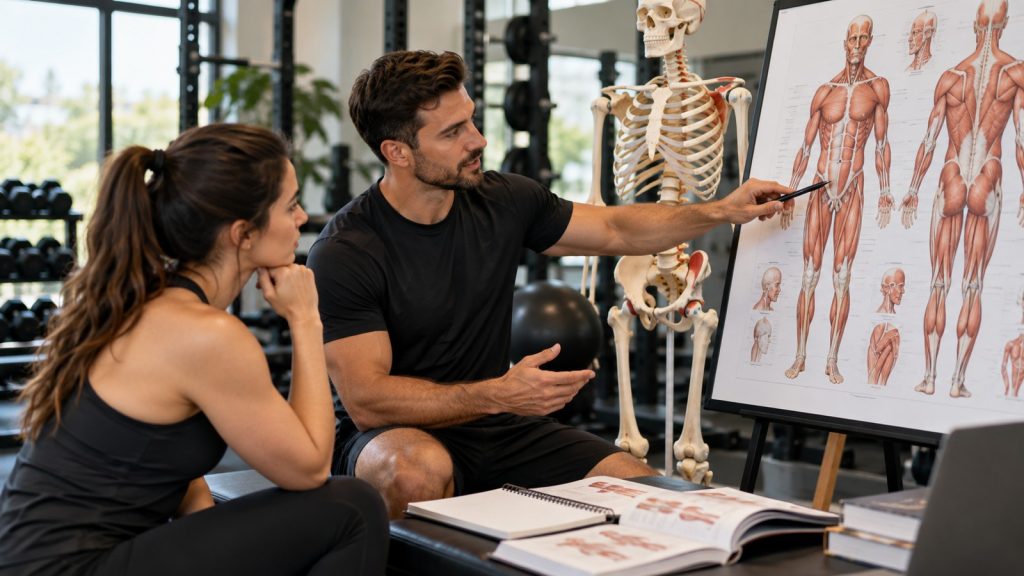
Anatomy is the study of body structures. In fitness, that includes understanding major muscles, joints and movement patterns. When a trainer understands which structures are involved in an exercise, it becomes easier to explain the movement, identify its purpose and select alternatives when needed.
Physiology helps you understand exercise responses
Physiology looks at how body systems function. Exercise changes breathing, heart rate, energy demand, muscular fatigue and recovery. A trainer does not need to turn every session into a science lecture, but understanding these responses helps support appropriate exercise choices and progression.
It improves exercise instruction
Good coaching cues are usually simple, but they should come from sound knowledge. A trainer who understands joint actions and muscle function can give clearer instructions and avoid relying on vague or misleading explanations.

It supports program decisions
Exercise selection should connect to the client’s goal and current ability. Knowledge of movement and body systems helps a trainer think about which exercises fit the purpose of the program, how different exercises overlap and how training stress can be organised across a session or week.
It helps trainers stay within scope
Knowing more about the body should also make a trainer more aware of what they do not diagnose or treat. If a client reports pain, symptoms or a health issue that requires clinical expertise, the trainer should recognise the boundary between fitness instruction and medical or allied health practice.
You do not need to memorise everything at once
Anatomy and physiology can feel technical when you first encounter it. The goal is not to memorise every term in isolation. It is more useful to connect the theory to real exercises, movement demonstrations and practical coaching. Over time, repetition helps the information become part of everyday decision-making.
From theory to practical coaching
Fitness qualifications combine underpinning knowledge with practical application. Certificate III builds foundational fitness instruction skills, while Certificate IV develops the more individualised programming and coaching skills used by personal trainers.
Ready to take the next step?
Explore OPTI’s Certificate III, Certificate IV or Dual Qualification in Fitness if you want to build the theory and practical skills required for a career in fitness. Certificate III in Fitness, Certificate IV in Fitness and Dual Qualification in Fitness. Contact OPTI if you would like help choosing a pathway.
Online Personal Training Institute | RTO 46231
Reviewed by Stephen Senyard, Trainer and Assessor, Online Personal Training Institute